Exploring the architectural grandeur of Dolmabahçe Palace

Dolmabahce Palace in Istanbul is the largest palace in Turkey and is known for its flamboyant and elegant architecture. This opulent palace is an eclectic mix of ornate baroque and rococo style with Ottoman style. Read on to find out more about the architecture of this lavishly decorated regal palace.

Dolmabahce Palace architecture & design

Dolmabahce Palace Architecture

The Baroque and Rococo style embellishments on the outside façade of Dolmabahce Palace highlight the European influence on the Ottoman Empire. The interiors reflect the traditional Turkish nature of the palace. The south side of the palace, known as Mabeyn-i-Humayun, consists of the male living quarters and administrative offices. The north side or the Harem-i-Humayun housed the women of the royal family. Between the two sections is a massive Ceremony Hall also known as Muaide Salon.

The palace was lavishly decorated with French baccarat glass, Bohemian crystal staircase railings, gold, carpets from Hereke made of a blend of silk, cotton, and wool, vaulted glass ceilings, Marmara marble, and the iconic crystal chandelier that was ordered from England.

Domabahche Palace is iconic as it heralded the Westernization of the Ottoman Empire. It is an elegant blend of Ottoman and Western architecture, creating a beautiful fusion that reflects its unique identity as a palace straddling the East and the West.
Who designed Dolmabahce Palace?

Garabet Amira Baliyan

Garabet Amira Baliyan was the Court architect who worked during the reign of Sultan Abdelmecid. His most famous work is the Dolmabahce Palace. Other notable works that he contributed to include the Grand Mecidiye Mosque in Ortaköy and the Yildiz Palace.

Nigogos Baliyan

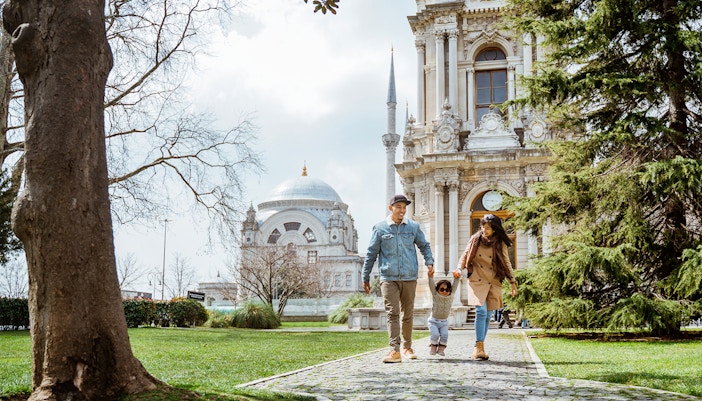
Nigogos Baliyan worked with his father on Dolmabahce Palace. He primarily designed the Dolmabahce clock tower and the mosque. His other works include the Ihlamur Pavilion, the Küçük Mecidiye Mosque, and the Armenian Hospital.

William James Smith

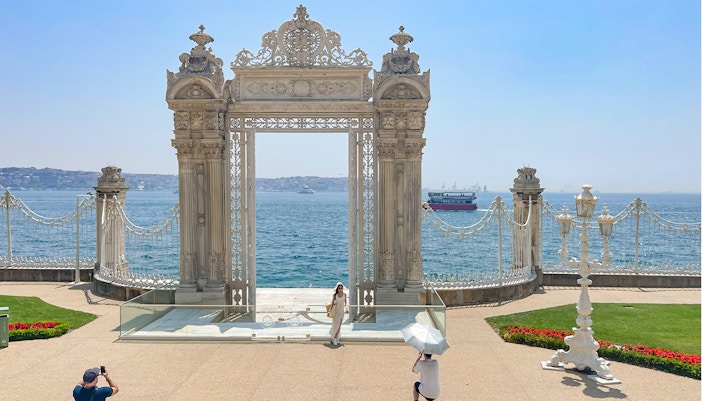
William James Smith was An English architect who came to the Ottoman Empire primarily to redesign the British embassy. He designed the glass kiosk at Dolmabahce Palace. His other notable works include the Tophane Imperial Kiosk and the Naum Theatre.

Structure of Dolmabahce Palace

Dolmabahce Palace Architecture

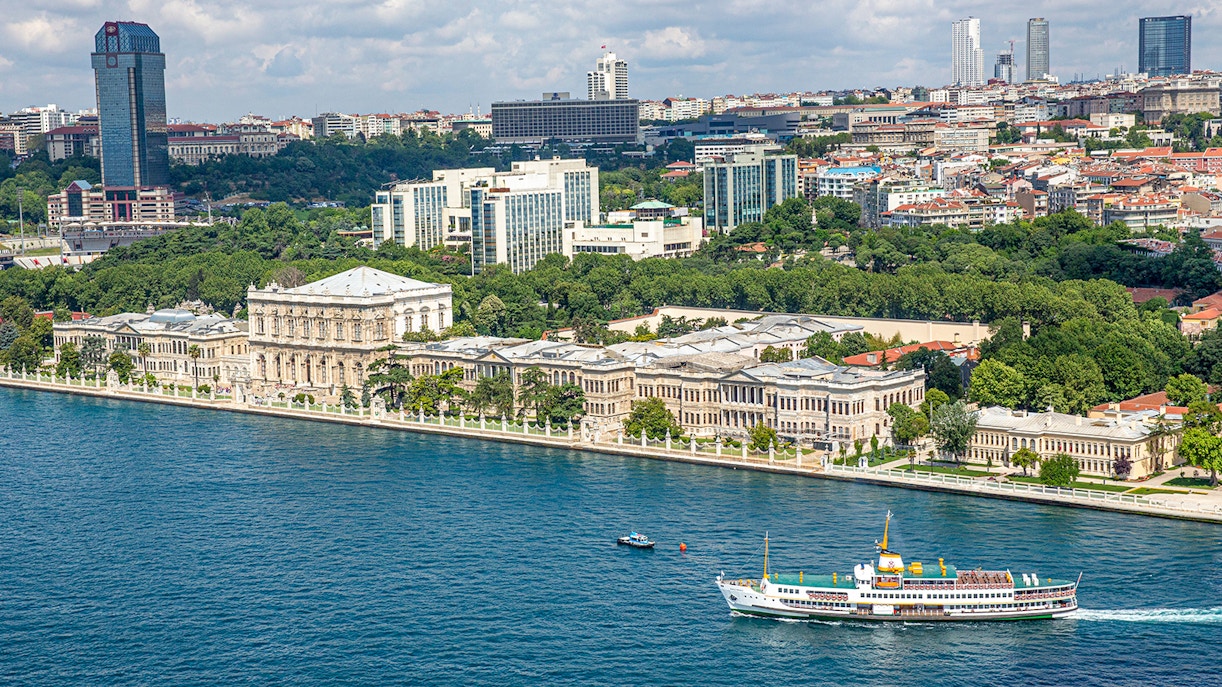
Dolmabahche Palace is a single palatial structure whose exteriors are made of stone and interiors of brick. It is an elegant blend of European and Ottoman architecture. The palace’s interiors were traditionally Ottoman in design. It consisted of the Mabeyn-i-Humayun or male living quarters on the Southern side, which also acted as the administrative offices of the Ottoman Empire. The Harem-i-Humayun on the northern side was not just the women’s quarters but also included the Sultan’s private residence. This royal residential section has 8 adjoining apartments. These two areas were separated by a 2,000-square-meter Ceremony Hall or Muaide Salon.

Stages of construction of Dolmabahce Palace

Materials
Dolmabahce Palace has a stone façade and its interiors are made of bricks. Marmara marble, Egyptian alabaster, and other exotic materials like crystals, glass, and gold were also used in its construction.

Dimensions
This elegant and opulent palace covers 45,000 sq.m and is the only palace in Istanbul to have a mono-block structure. Its exterior is vintage European with two wings flanking an elegantly designed ornate central block. It has 285 rooms, 44 hallways, 68 toilets, and 6 hamams (Turkish baths). The Ceremony Hall is 2,000 sq.m with a 36-metre-high domed ceiling.

Decorations
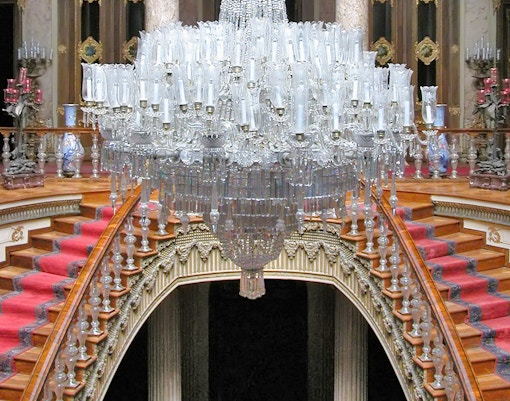
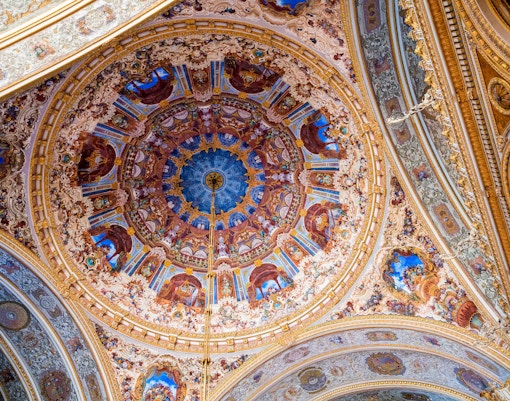
Dolmabahce Palace, whose name means “Filled Gardens”, sparkles with crystals and 35 tonnes of gold. This palace has many Hereke carpets, the largest of which is displayed in the Ceremony Hall. The palace was also lit by gas lamps and had flush toilets, which were rare in the 19th century even in continental Europe. The staircase leading to the upper floors of the palace is shaped like a double horseshoe in the ornate Baroque style. It is made of brass and mahogany, with the handrail spindles made of Baccarat crystals. This famous crystal staircase has a Victorian-era crystal chandelier hanging from a domed ceiling that is made of vaulted glass.

The Exterior & Interior of Dolmabahce Palace

Dolmabahce Palace Exterior

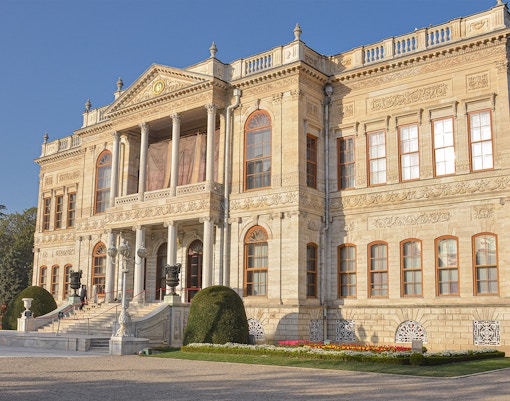
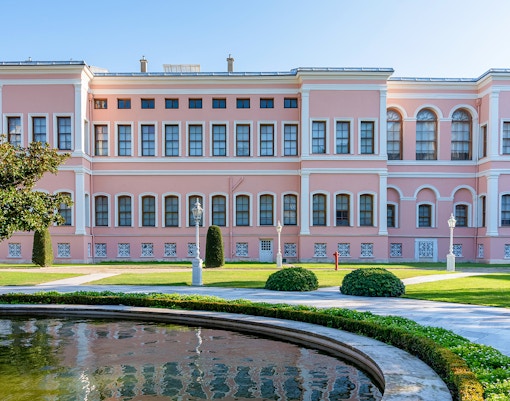
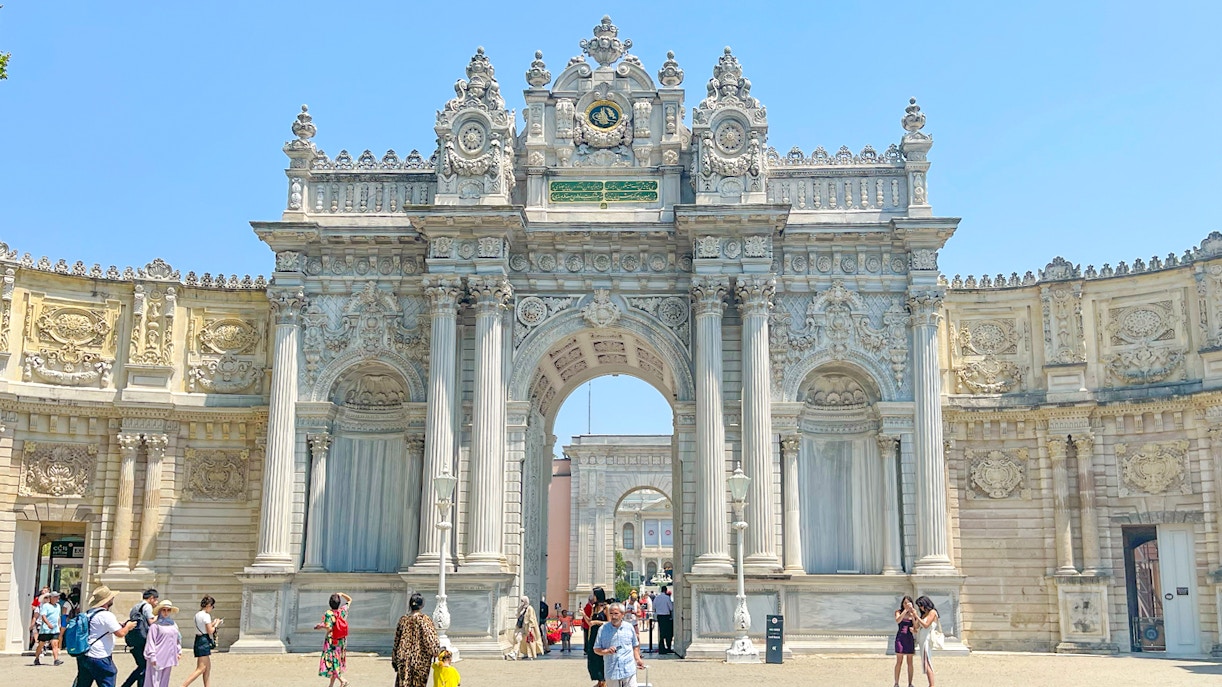
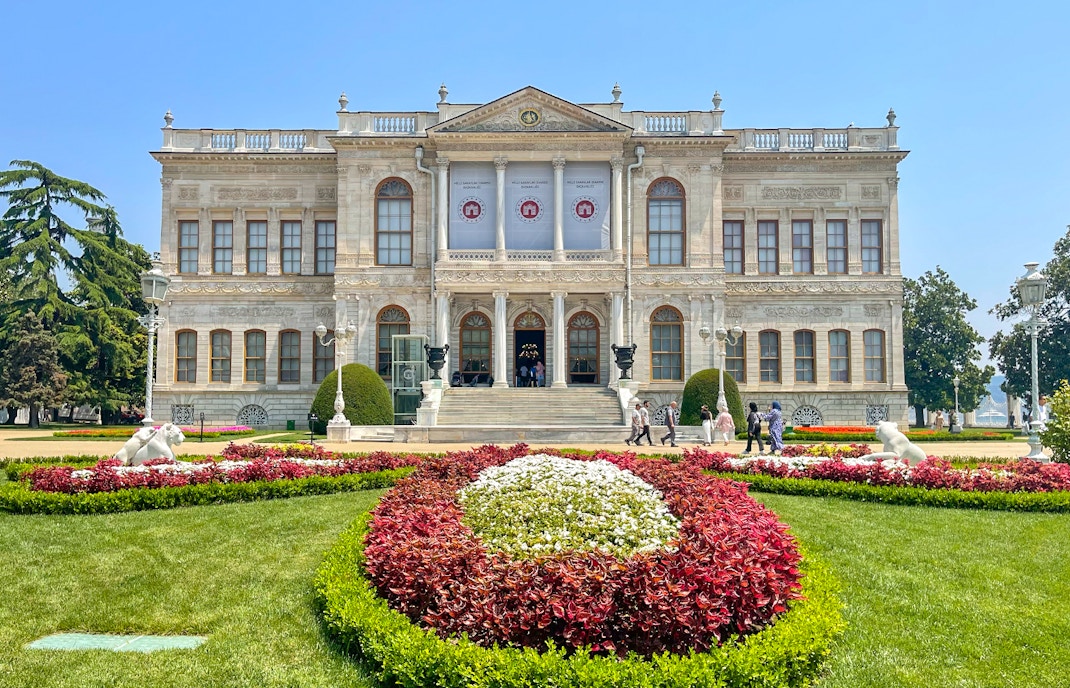
The stone façade of the mono-block Dolmabahce Palace is an amalgamation of Baroque and Rococo styles. It is embellished with a number of ornate Doric and Ionic pillars. The palace gardens are similar to other baroque gardens and are geometrically shaped, with statues and waterbodies artfully placed to create scenic beauty.

About Dolmabahce Palace

Dolmabahce Palace Interior

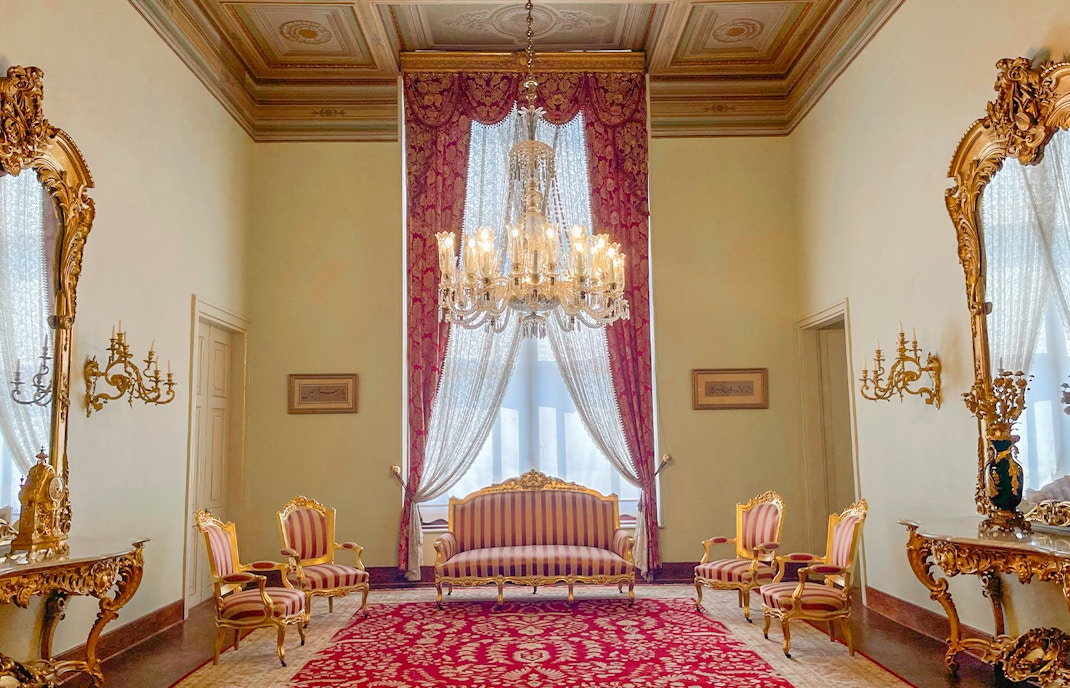
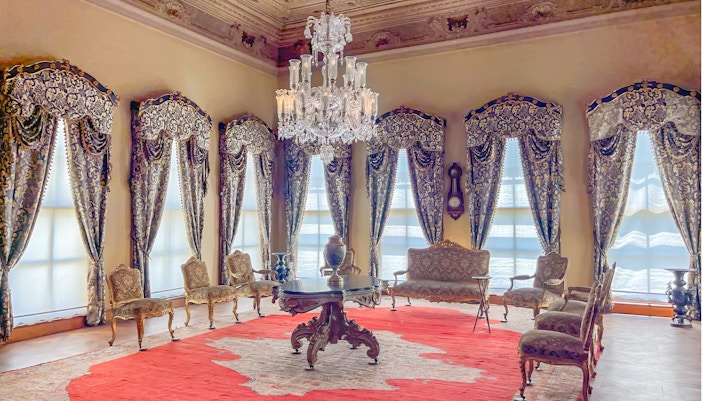
Dolmabahce Place has quintessentially Ottoman-styled interiors lavishly decorated with crystals and gold. The Mabeyn-i-Humayun, with the administrative section and men's living space, is on the southern side. On the north is the residential area that also housed the women’s quarters (Harem-i-Humayun). The elegant Ceremony Hall connecting these two sections is illuminated by the iconic Victorian crystal chandelier.

Inside Dolmabahce Palace

What to see at Dolmabahce Palace

The Crystal Staircase

This is the main staircase leading to the upper floors of the palace from the Ceremony Hall. It is an ornate baroque-style double horseshoe-shaped staircase made from crystal spindles below the mahogany and lead railings. The glass-vaulted ceiling makes it sparkle during the day and it is illuminated by the world’s largest crystal chandelier. This chandelier has 750 lamps and weighs 4.5 tonnes. It took 2 months to install this chandelier that was made in England.

Ceremony Hall or Muaide Salon

This is the most impressive room in the palace. It is supported by 56 Greek pillars and ornate gold decorations. The 36-metre-high domed ceiling has a magnificent 4.5-ton Bohemian crystal chandelier. The Sultan received important guests in this room and many major diplomatic events were conducted. This room was also used for the coronation of Sultan Murad V and was also known as the Throne Room. This 2000 square meter elegantly furnished sea-facing hall displays the largest Hereke rug in the world.

Mabeyn-i-Humayun

Known as the administrative section of the palace, this section is also known as the Selamlik or the exclusive men’s living quarters. It is made up of 4 major halls has 4 fireplaces and is decorated with crystal pieces that reflect different lights and colours at various times. The Tiled Hall or the Clerk’s room also houses the ‘Surre Alayi’ a painting by Stefano Ussi. Decorated with Hereke rugs, crystal, and gold, this elegantly furnished room has breathtaking views of the sea.

Harem-i-Humayun

This was where the Sultan’s mother, his wife, family, and his  concubines lived. Though not a separate structure, the Harem was secluded. Decorated with Baccarat crystal chandeliers, rugs from Yildiz palace, intricate gold inlaid upholstery, and lavish furnishings, these apartments are fashioned in the neo-baroque style. Each of them are intrinsically Turkish by design and have their own hamams, which are carved from Egyptian alabaster. The Pink Hall, the Blue Hall, and Ataturk’s room are the most noteworthy rooms.

Dolmabahce Palace harem

Frequently asked questions about Dolmabahce Palace architecture

Dolmabahce Palace is a blend of Ottoman, Baroque, Rococo, and neoclassical architectural styles.

More Reads

How to get to Dolmabahce Palace

Book Now

Dolmabahce Palace harem

Book Now

Visit Dolmabahce Palace

Book Now